Design my room in 3DMy room in 3D

Dado rail guide

Wooden dado rails: history, height and fitting

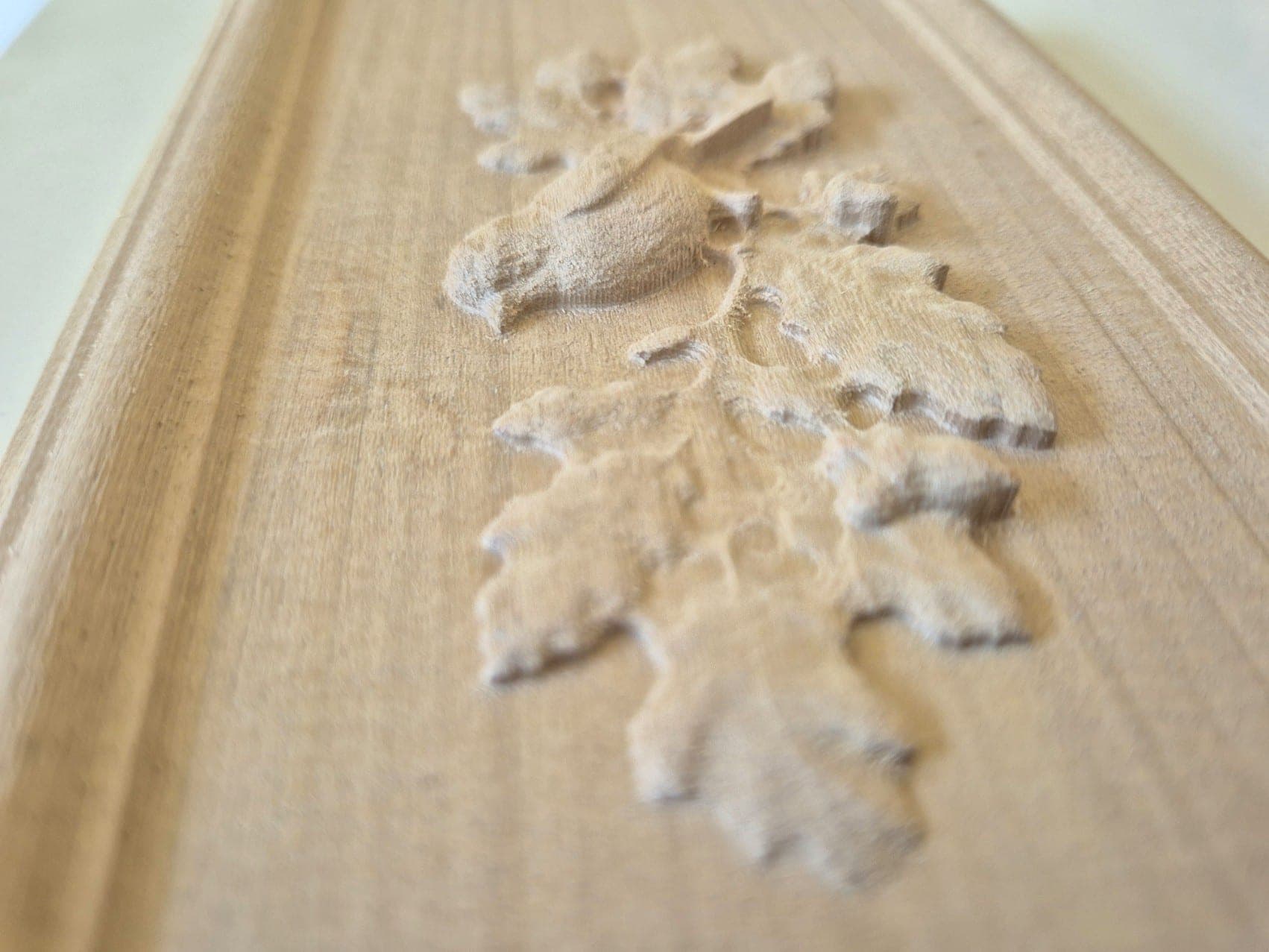
A dado rail is a horizontal moulding fixed around a room at about the height of a chair back. It protects the wall, splits it between two colours or finishes, and caps any panelling below. The French call it a cimaise, a word that in galleries also means the wall where paintings hang. This guide covers where the rail comes from, how high to fit it in a British room, how to choose, fix and mitre it, and the dado rails our workshop makes near Toulouse.

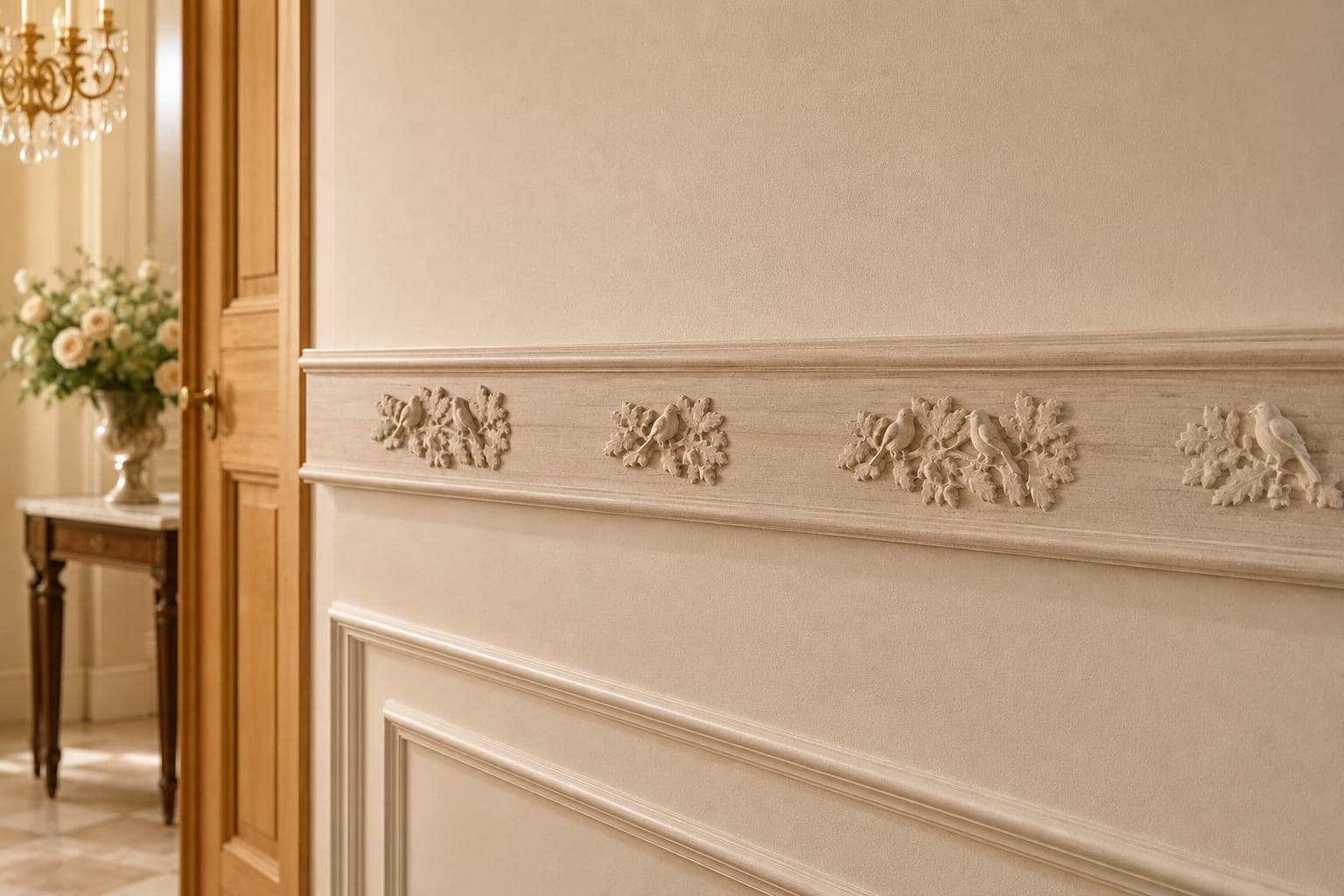
Low-angle view of the Songbird Dado Rail: carved oak leaves and a bird alongside the moulded edge

What is a dado rail?

A dado rail is a moulding fixed horizontally around the walls of a room, usually about a metre from the floor. It marks the top of the dado, the lower part of the wall between the rail and the skirting board. Dado is the Italian word for a die or cube: in classical architecture it names the block-like middle section of a pedestal, and the rail is the moulding that crowns it.

This origin explains its place on the wall. In the classical interiors of Bath, the dado with its skirting and rail stood for the pedestal of an order, the wall above for the column shaft and the cornice for the entablature. Older texts call the rail a surbase, and in the United States it is usually known as a chair rail.

Dado rail, cimaise or picture rail: what is the difference?

A dado rail and a cimaise are the same moulding, in English and in French; a picture rail is a different one, fixed high up to hang frames. The French word comes from the Latin cymatium and the Greek kymation, a small wave, and first named the S-shaped moulding that crowns a classical cornice. In French galleries, cimaise also means the wall on which paintings hang: in exhibitions, the first row of canvases once rested on the rail at chair height, the best-placed spot.

A picture rail runs high on the wall, often around 30 cm below the ceiling or cornice, and frames hang from it on hooks and cords. Its modern gallery version is a metal track, which the French also call a cimaise. A dado rail stays in the lower third of the wall and is mainly decorative; a wooden rail meant to carry frames must be screwed into the wall and is best fitted high, as a picture rail. Our workshop makes decorative dado rails in solid wood, not picture hanging systems, which are a job for specialist suppliers.

Georgian and Victorian dado rails

Georgian interiors made the dado rail a familiar feature. Dining chairs were often left drawn up against the walls, and the rail stopped their backs from damaging an expensive wall covering. Its height followed the proportions of the room rather than a fixed figure, so a tall reception room could take its rail higher than a modest bedroom.

Fashions changed in the Victorian era and the rail fell out of favour for a time, before returning towards the end of the century and into the Edwardian years as a mostly decorative line. It is often found in hallways and on landings, sometimes above an embossed covering such as Lincrusta, launched in 1877. In a late Victorian or Edwardian hallway, reinstating a dado rail is one of the simplest ways to bring back the period character.

How high should a dado rail be?

In British homes, a dado rail usually sits around 900 mm to 1 m from the floor. The Cambridge Dictionary describes it as fixed about one metre up, and fitting guides compare that height with a door handle. There is no fixed standard, though: a traditional rule of thumb puts the rail at about a third of the wall height, so tall Victorian rooms take it higher, up to around 1,100 mm.

Then look at the lines already in the room. Where you can, align the rail with the window sills so that one horizontal line runs all the way round. If the sills are too high, set the rail slightly low rather than slightly high, because a rail placed too high makes a room feel squat. Stop it neatly against door architraves instead of cutting across them, then mark your height at several points and join them with a level line.

Work out your dado rail height

Enter the ceiling height and, if a window is close by, the height of its sill: the calculator applies the proportion rules of the AC Boiseries 3D simulator.

Top of the dado rail at 89 cm from the floor

  • Proportion used: 33% of 270 cm gives 89 cm (an exact third would be 90 cm).
See the result in 3D

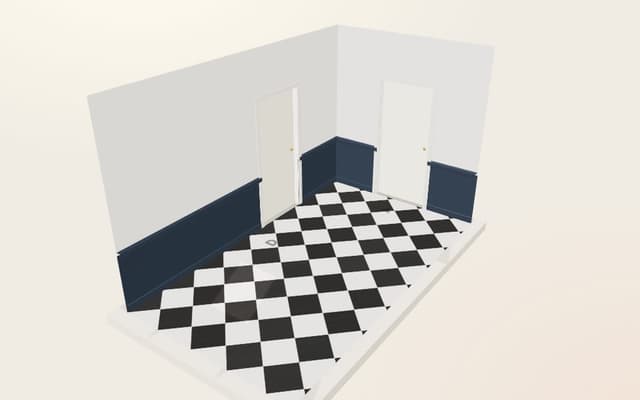
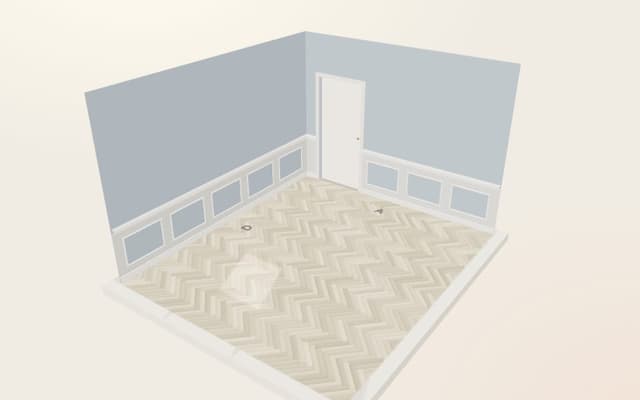
The simulator opens on a room of this height, dressed with a skirting board and a dado rail.

Recommended height of the top of the dado rail, in centimetres from the finished floor, with no window nearby
Ceiling heightExact thirdDado rail onlyLouis XV styleHaussmann styleChâteau grand salon
2.40 m8085758595
2.50 m8385758595
2.70 m9089818997
3.00 m100999099108
3.20 m10710095105115
3.50 m11710095105115
3.80 m12710095105115

Values set by the 3D simulator. Each style bounds the rule of thirds: depending on the style, the rail never drops below 75 to 95 cm or rises above 95 to 115 cm.

Which profile and wood should you choose?

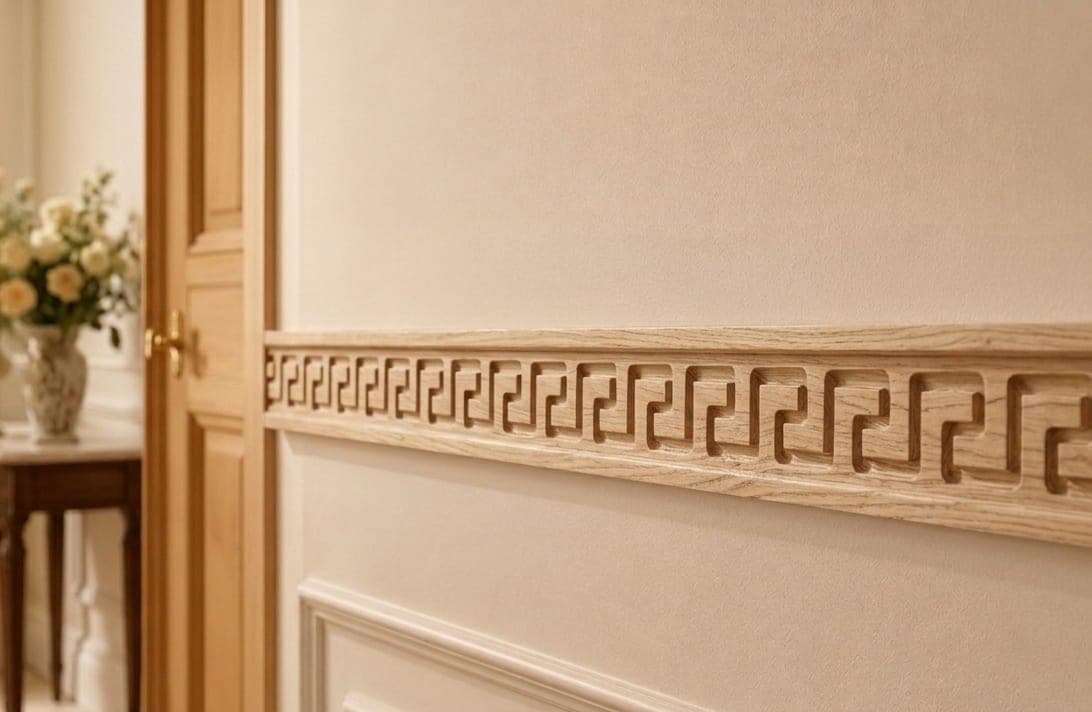
Choose the profile for the style of the room and the weight you want the line to carry. A plain rail with an S-shaped profile suits a restrained scheme; a rail with beads, a Greek key or scrolling foliage belongs in a richer room. Where mouldings already exist, repeat a profile or an ornament from the cornice or the door surrounds. Our guide to decorative wood mouldings explains the main profiles and period styles.

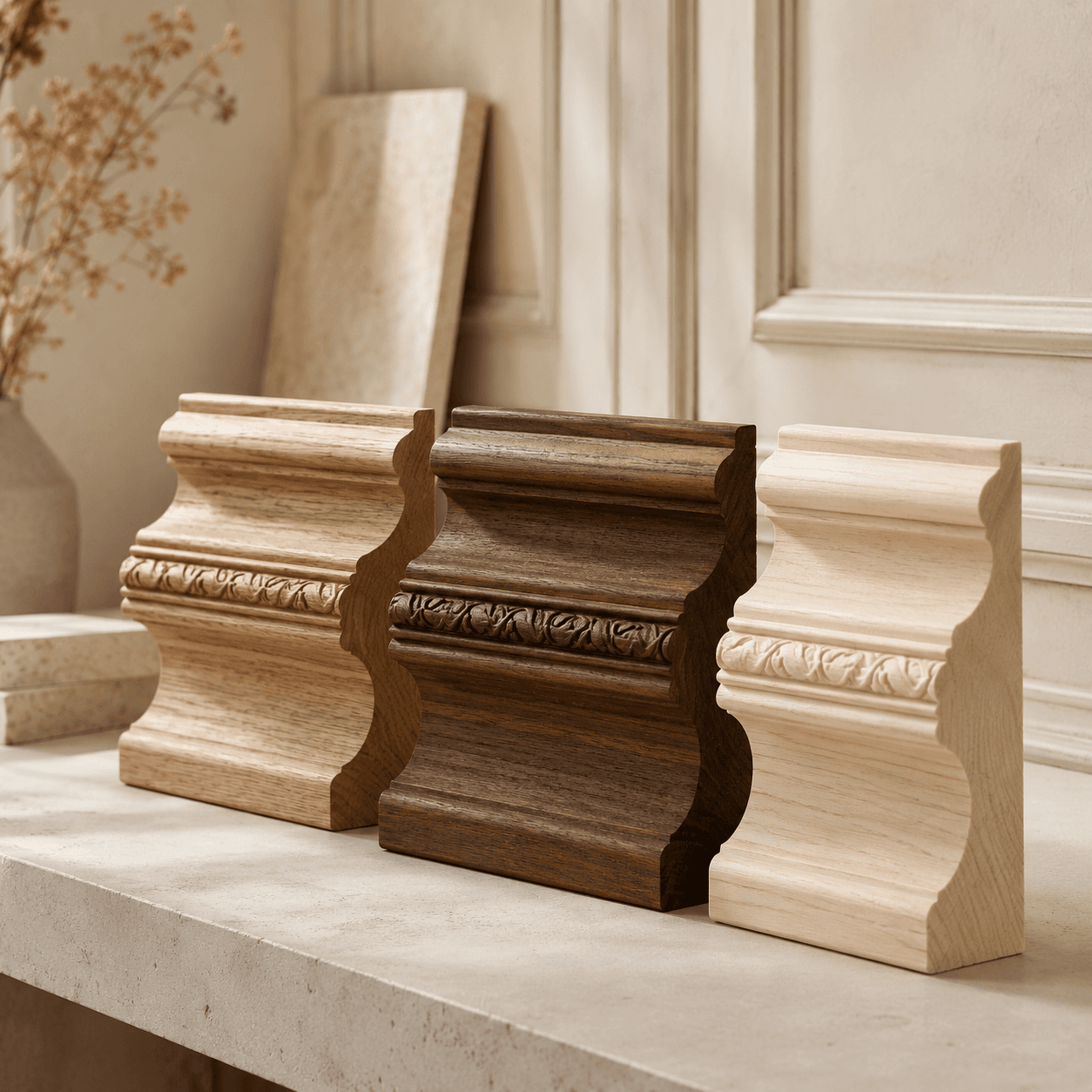
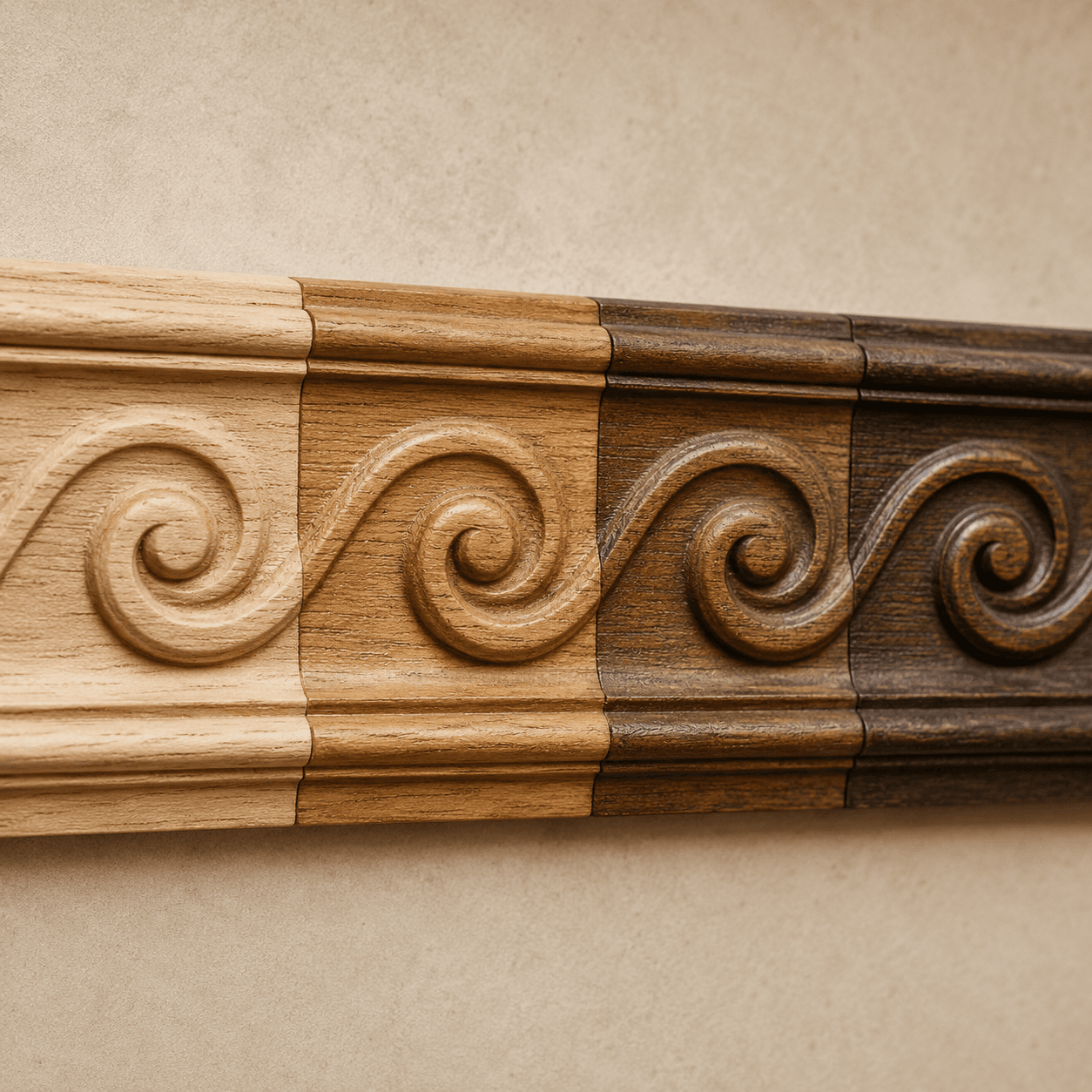
The wood depends mainly on the finish. For a painted rail, a pale, even wood such as poplar is worth considering; an oak dado rail left visible shows its grain, as do walnut and chestnut. Rails can be supplied raw, ready to paint on site, or finished with wax, varnish, stain or paint. Our article on choosing a wood for a moulding compares these species in detail.

How to fit a dado rail

A dado rail is glued, then pinned or screwed along a level line, with its corners mitred or coped: a job for a careful DIYer or for your joiner. Our rails are supplied ready to fit, and we are happy to talk to whoever fits them to give them the information they need. Most guides use grab adhesive along the back, with panel pins while it sets; a solid wood dado rail has real weight, so on old walls, add screws and suitable wall plugs.

External corners are mitred at 45 degrees with a mitre saw or a mitre box. Internal corners are better coped, because walls are rarely square: the second length is cut to the profile of the first with a coping saw, so it sits tight even if the corner is out of true. For a carved rail, set out the lengths before cutting so that the motifs fall neatly at corners and doors; on request, the workshop can prepare this setting out.

Our carved dado rails in solid wood

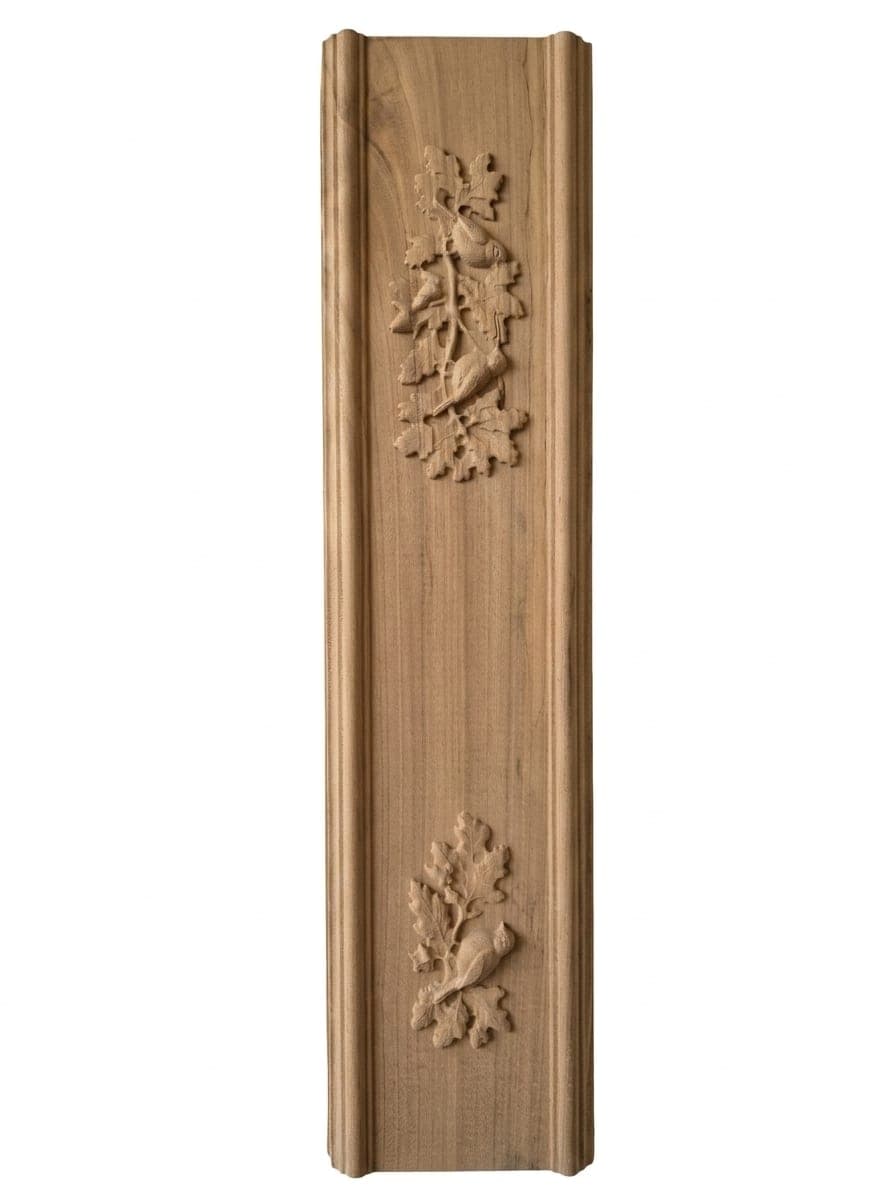
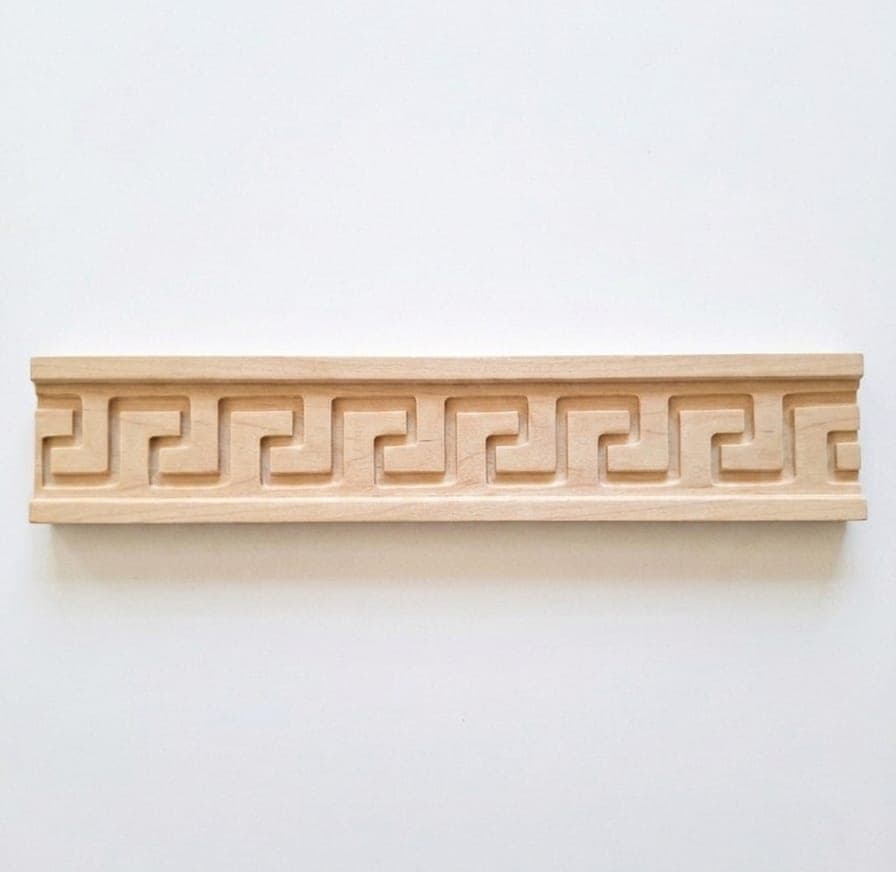
Our workshop makes several decorative dado rails. The Greek key dado rail, in poplar or oak, runs a right-angled line that turns back on itself, an ornament used since antiquity; the spiral dado rail unrolls scrolling foliage; the songbird dado rail sets small birds on oak sprigs, a pair facing each other and a third a little apart. Each design is created in 3D, made in our workshop in Cornebarrieu, near Toulouse, then finished and detailed by hand.

For a specific room, the customisable dado rail lets you choose the wood, the finish and the length. If an old rail has been cut by a new doorway or damaged during building work, we can make the missing length to match from a fragment, a measured drawing or clear photos: see our antique boiserie reproduction service. We make new pieces; restoring the original can be entrusted to a partner restorer.

Frequently asked questions

How high should a dado rail be?

In most British rooms, a dado rail sits around 900 mm to 1 m from the floor, roughly a third of the wall height. In tall Georgian or Victorian rooms it can go up to about 1,100 mm. Where possible, line it up with the window sills, and if in doubt set it slightly low rather than high, which stops the room from feeling squat.

What is the difference between a dado rail and a picture rail?

A dado rail runs around the lower third of the wall, about a metre up, to protect it and divide it into two zones. A picture rail runs high, often some 30 cm below the ceiling, and is used to hang frames on hooks and cords. Both are horizontal mouldings, but only the picture rail is designed to carry weight. A solid wood rail can serve as one if it is screwed into the wall rather than glued: mention this use when you order.

Should dado rail corners be mitred or coped?

External corners are usually mitred, with each length cut at 45 degrees. For internal corners, many fitters prefer a coped joint: the first length runs square into the corner, and the second is cut to its profile with a coping saw. Because walls are rarely perfectly square, a coped joint stays tighter than a mitre. Small gaps are then filled with flexible caulk.

What is a dado rail called in French?

In French, a dado rail is called a cimaise, from the Latin cymatium and the Greek word for a small wave. The same word names the top moulding of a classical cornice and, in museums, the wall or metal track on which paintings hang. The phrase avoir les honneurs de la cimaise means having a work displayed in a prime position.

Can you deliver a dado rail to the UK?

AC Boiseries delivers within France. For the United Kingdom and other countries, shipping is studied case by case, depending on the destination, so the best first step is to send us a description of your project. The workshop replies within 48 working hours and will tell you what is possible.

You may also like

Ready to ship
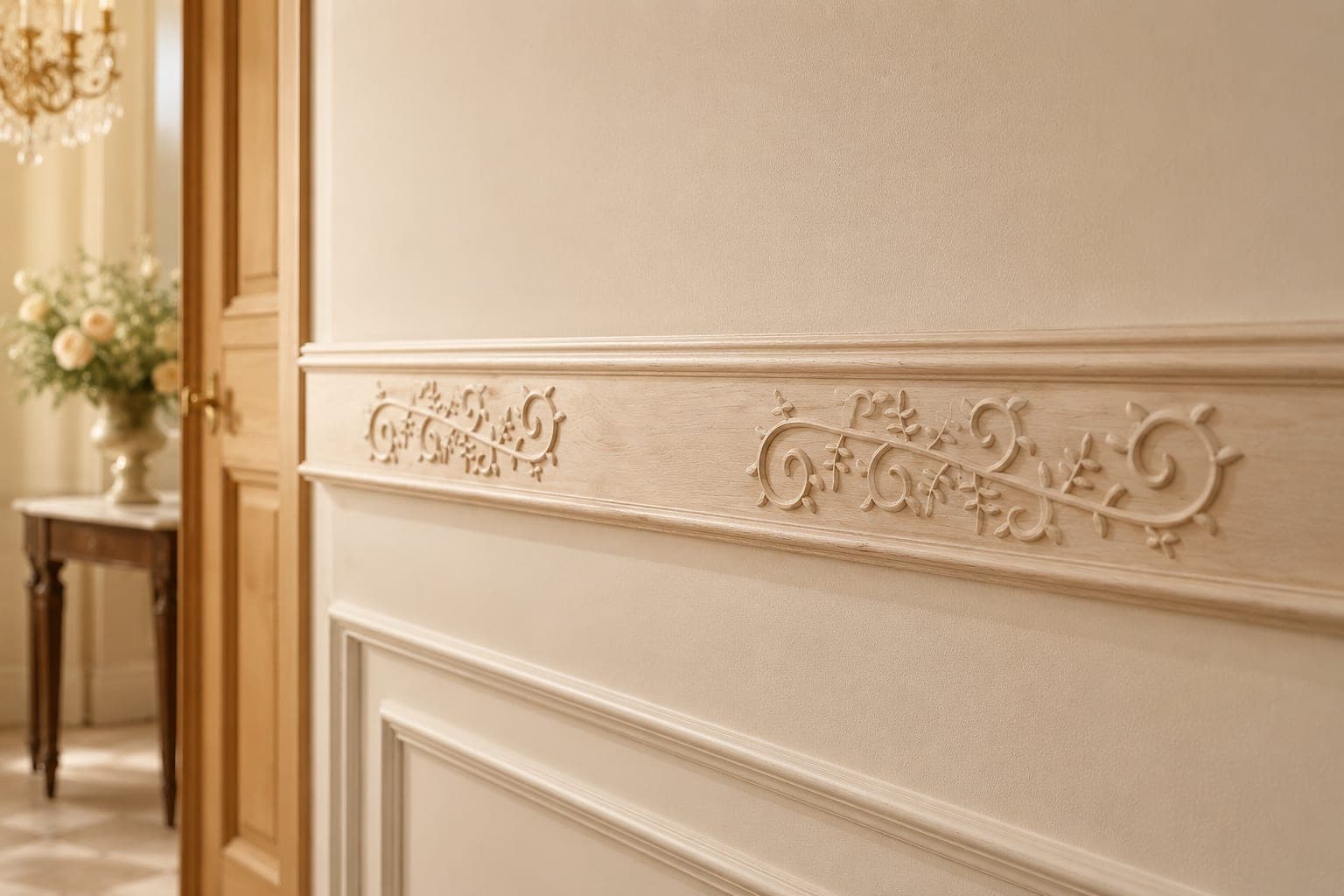
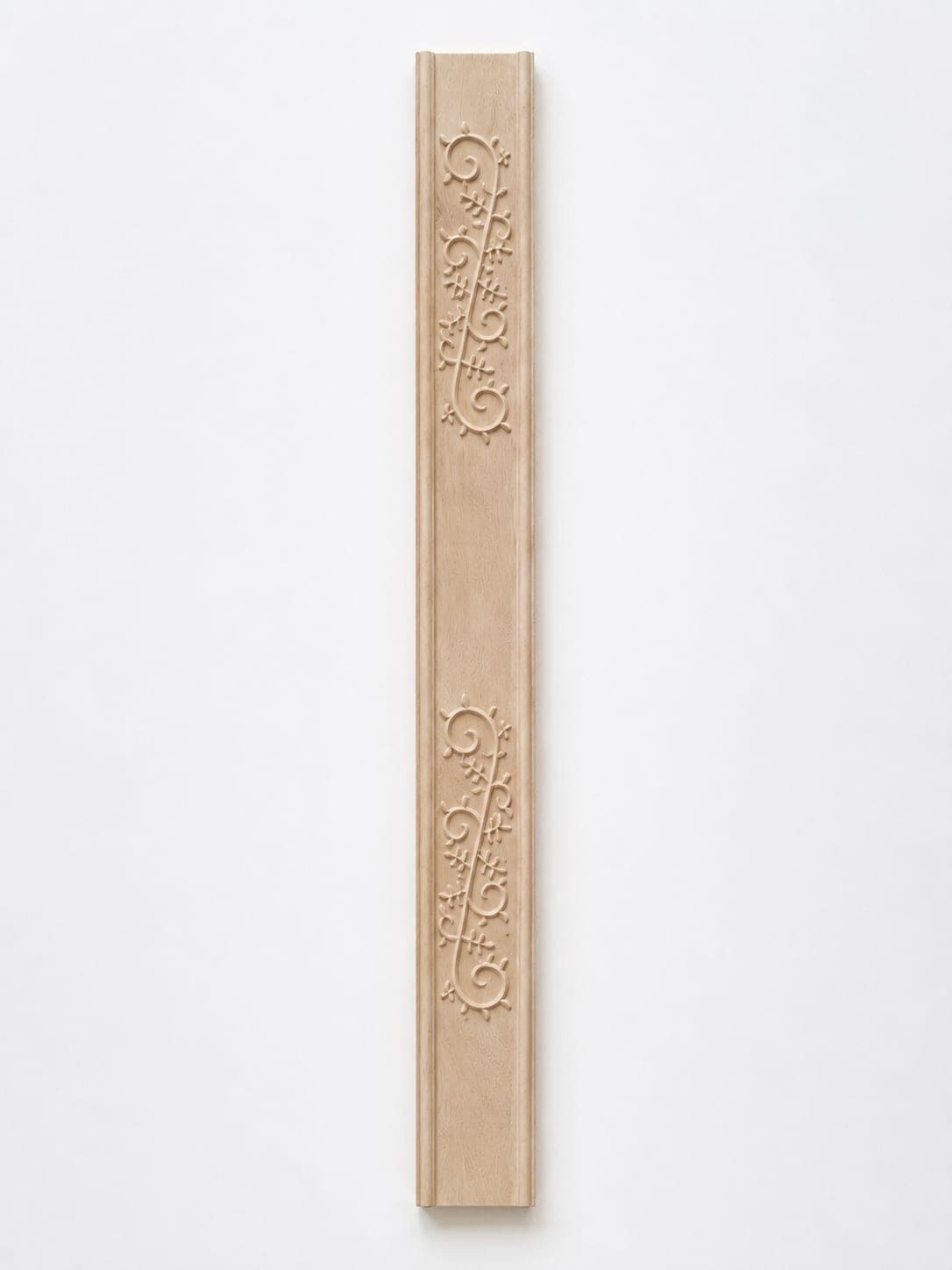
Spiral Dado Rail carved with leafy scrolls, shown in a room setting above cream moulded wall panellingSpiral dado rail in poplar, full length on a white background

Dado Rails & Friezes

Spiral Dado Rail

Bring a touch of timeless elegance to your interior with this carved wood dado rail and its delicate spiralling foliage. Inspired by classical decoration, it enhances wall boiseries, trims dado panelling or sets off a door, a piece of furniture or a fireplace. Its finely detailed relief creates a play of light and shadow that instantly enriches your decor. Easy to work into a classic, Haussmann-era or contemporary interior, this decorative moulding is ideal for creating high-end boiserie with authentic charm.

100 × 11.6 cm · Poplar

€49.50

View
Dado rail guide

A dado rail to design or match?

Send us your ceiling height, a photo of the wall or a fragment of the old rail: the workshop replies within 48 working hours.

Describe my project