Bespoke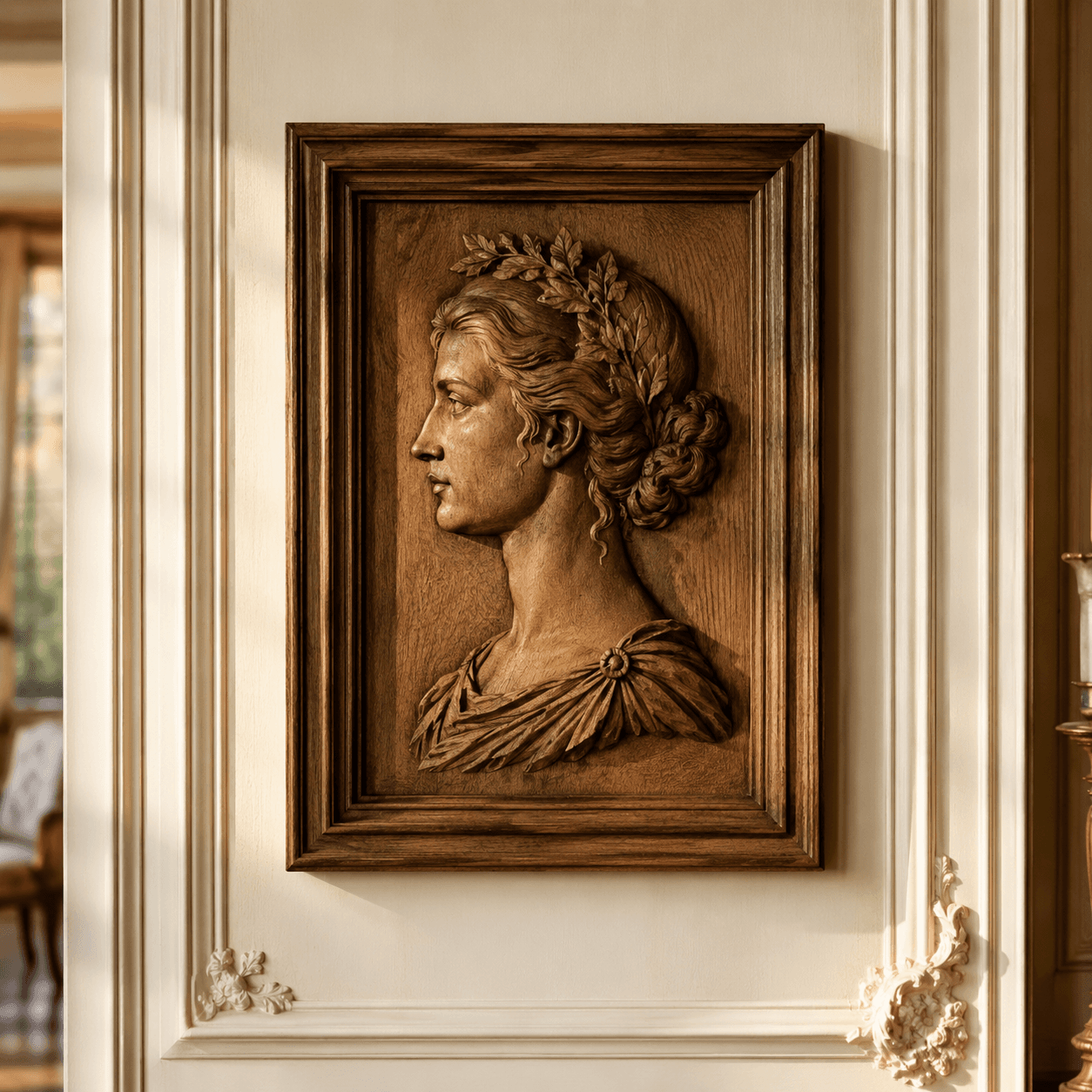
Coats of Arms & Portraits
Carved Portrait
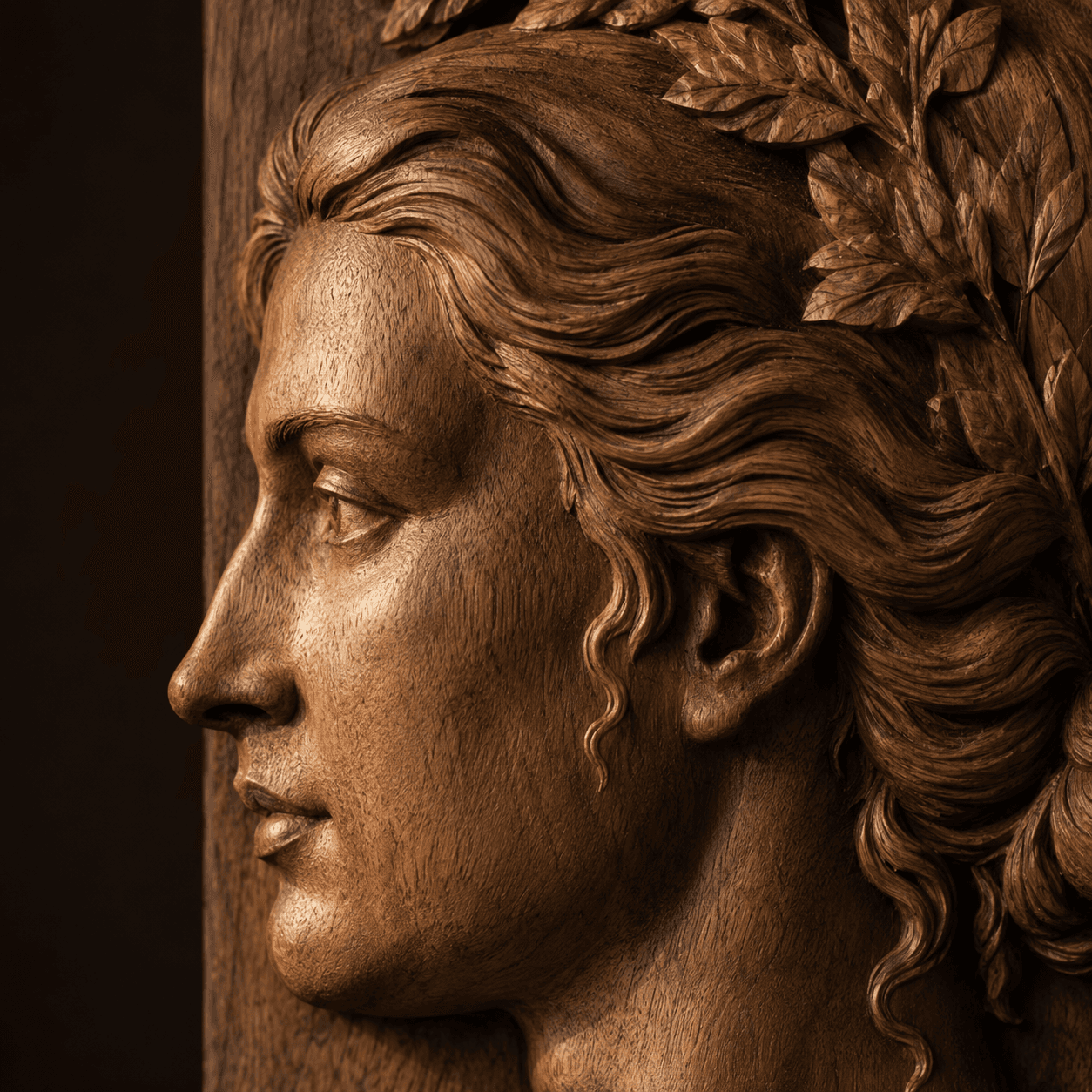
A portrait or family coat of arms, carved using visual references.
Size studied on request · Oak, Walnut
From€590.00
ViewChâteaux and historic houses
An overdoor sold a century ago, a stretch of panelling ruined by damp, a moulding torn off during building work: in a château, a manor, a maison de maître or a hôtel particulier, antique boiseries often have gaps. Here is what these interiors contain, why elements have disappeared, what rules govern a protected monument, and how AC Boiseries makes, in solid wood and to match, the new pieces that complete the whole without touching the original material.
Mostly panelling, or lambris: joinery panels set in moulded frames. Dado panelling stops at leaning height, full-height panelling rises to the cornice, and the dado rail marks the line between the two. Then come overdoors, carved or painted; trumeaux, panels of wood or mirror glass taller than they are wide, set between two windows; and carved panels. For country houses and hunting lodges, Jean-Baptiste Oudry painted overdoors of hounds and game.
In the seventeenth and eighteenth centuries, château panelling was more than ornament: according to the Centre des monuments nationaux, it marked the social rank of each room, improved acoustics and insulated against cold and damp. Its style helps to date a scheme: symmetry under Louis XIV, softer lines during the French Régence, the shells and acanthus of rocaille in Louis XV boiserie, and a return to straight lines and ribbon bows in Louis XVI boiserie, from around 1760. Our guide to decorative mouldings details the profiles and ornament.
Because many boiseries were dismantled and sold, while others suffered from damp, insects or building work. At the Château de Bercy, demolished in 1861, the décor had been auctioned in 1860: some panelling was reinstalled in Paris town houses, sometimes mixed with unrelated elements, and some in England. The panelling of the grand salon of the Château de Draveil, from around 1735, was sold to a Paris dealer, then acquired in 1928 by the Philadelphia Museum of Art.
As the Musée des Arts Décoratifs points out, the demolitions of Haussmann's works under the Second Empire revealed the market value, and the historical value, of these interiors. Wood also has its enemies: house longhorn beetles, furniture beetles and dry rot, a fungus that thrives after water damage or a renovation that has blocked the ventilation. Then there is building work: a partition moved, a duct to run through. Even at the Metropolitan Museum of Art, the boiserie from the Hôtel de Lauzun includes one modern panel.
To remake château boiserie to match, you need a workshop that makes new pieces from what survives (a fragment, a survey or photographs), in the same wood and with a finish matched to the décor, working with the restorer and the architect. That is what AC Boiseries does: each piece is designed in 3D, made in our workshop in Cornebarrieu, near Toulouse, then finished and detailed by hand. On a château restoration project, we make the new part; the original material is the work of a restorer, your own or our partner.
Making to match does not mean inventing. The Venice Charter (1964) sets out two principles: restoration 'must stop at the point where conjecture begins', and replacements of missing parts 'must integrate harmoniously with the whole, but at the same time must be distinguishable from the original'. For carved panelling, you therefore copy the ornament that survives, not a catalogue design: writing about the cabinet from the Hôtel de Rochegude, the Musée des Arts Décoratifs stresses that every ornament in it was designed and made as a unique piece.
On a monument historique, any work on protected boiseries requires authorisation from, or a declaration to, the French State. A building that is classé, the highest level of protection, cannot be restored, repaired or altered without authorisation from the regional prefect, except for routine maintenance; the work is then carried out under the State's scientific and technical supervision. If it is not State-owned, its restoration is entrusted to an architecte en chef des monuments historiques, or to an architect with ten years' experience in restoring historic buildings who meets the conditions to compete for that title; its repairs, to an architect holding the 'architecture et patrimoine' (architecture and heritage) diploma.
A building that is inscrit, the second level of protection, cannot be altered without four months' notice to the regional prefect, whose consent is required if the work needs a building permit or a prior declaration. Whether classé or inscrit, detaching an element of décor fixed à perpétuelle demeure, that is permanently attached to the building, requires authorisation. According to the DRAC Occitanie, the regional cultural affairs office, any work beyond routine maintenance goes through an application to the département's UDAP, its architecture and heritage unit. Outside the monuments historiques system, a plan de sauvegarde et de mise en valeur, the protection plan of a historic town centre, can also protect interior décor.
For a historic house, first check the property's status: the Mérimée database, on the French Ministry of Culture's POP platform, shows the level and extent of protection; the Palissy database lists protected objects, including some boiseries. The workshop does not give legal advice: it makes pieces to the architect's specifications and supplies the drawings needed for the application.
The workshop works in stages: a photo file, a survey or a fragment; a drawing and 3D design, approved; making in Cornebarrieu; finishing and detail work by hand; a patina matched to the existing woodwork; then delivery. Owner, architect, decorator or hotelier: everything starts with overall and close-up views, a few dimensions and the original fragment if there is one, even a broken one. The drawing is approved by you, and by the architect on a protected monument, before anything is made.
Pieces are supplied ready to fit, according to the project's requirements; fitting is carried out by the joiner or firm you choose, with whom the workshop is happy to liaise. On-site surveys are possible, mainly in Occitanie, from the Gers to the Tarn and from the Lot to the Aveyron; for a house in the Loire Valley, the Périgord, the Bordeaux region or Burgundy, we work remotely: photos, dimensions, a template or a fragment sent to us, and a drawing approved before anything is made. Full method: antique boiserie reproduction.
The same wood as the existing work: most often oak, sometimes walnut or fir. A joinery manual of 1829 ranks oak first among building timbers, ahead of fir, and notes that most fixed joinery, panelling included, was intended to be painted. Walnut is found too: at Puycornet, in the Tarn-et-Garonne, early eighteenth-century church panelling is in painted and gilded walnut.
The finish follows the décor. On waxed or bare-wood panelling, the workshop matches colour and patina to the old work; on painted panelling, the piece can leave the workshop ready to paint, and the painter or restorer blends everything together. For a whole interior to be redesigned, see our bespoke woodwork; for a lost carved shield, a family coat of arms can be recreated from a stone, a seal or an armorial. To begin, send us your photos.
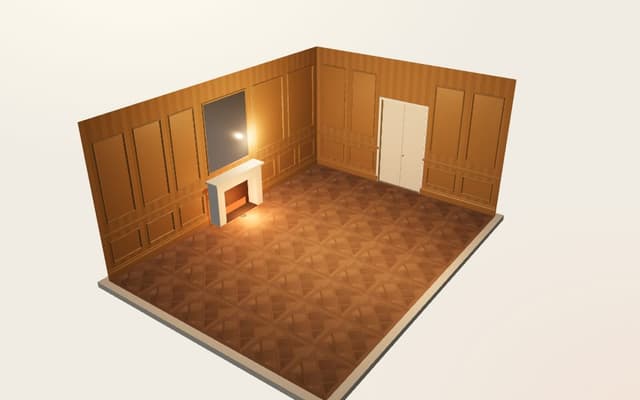
Rooms composed in the 3D simulator with these rules: open one, then enter your own measurements.
3D simulator render, for illustration.
Yes, if the part concerned is protected. A building classé as a monument historique cannot be restored, repaired or altered without authorisation from the regional prefect, except for routine maintenance, and detaching an element of décor permanently attached to the building also requires authorisation. For an inscrit building, work is declared four months in advance, or is subject to the prefect's consent if it requires a building permit or a prior declaration. The application is prepared with the département's UDAP.
Look it up in the Mérimée database on the French Ministry of Culture's POP platform: its entries, based on the protection orders, give the level and extent of protection, which may cover only part of the building. Protected objects, including some boiseries, appear in the Palissy database. If in doubt, ask the département's UDAP.
Restoring means working on the original material to preserve it: consolidating, cleaning, re-fixing paint or gilding. That is a restorer's work. Reproducing, or recreating, means making a new piece to match, to replace an element that has disappeared, from a fragment, a survey or photographs. AC Boiseries does the latter, and relies on a partner restorer when the old work also needs care.
Yes, if the photographs are usable: taken straight on, sharp, with a reference measurement, and supplemented by close-ups and a few dimensions. An original fragment, or the matching piece still in place, will nevertheless give a more reliable profile. At AC Boiseries, the drawing and 3D preparation are always submitted to the client, and to the architect on a protected monument, before anything is made.
Yes, if it follows the profile, ornament and wood of the existing work, and if its finish is matched to the patina of the neighbouring pieces. On restoration projects, the Venice Charter also recommends that a replacement should integrate with the whole while remaining distinguishable from the original parts. On a protected monument, the scheme approved by the architect sets that degree of legibility, and AC Boiseries makes the pieces to its specifications.
Coats of Arms & Portraits
A portrait or family coat of arms, carved using visual references.
Size studied on request · Oak, Walnut
From€590.00
View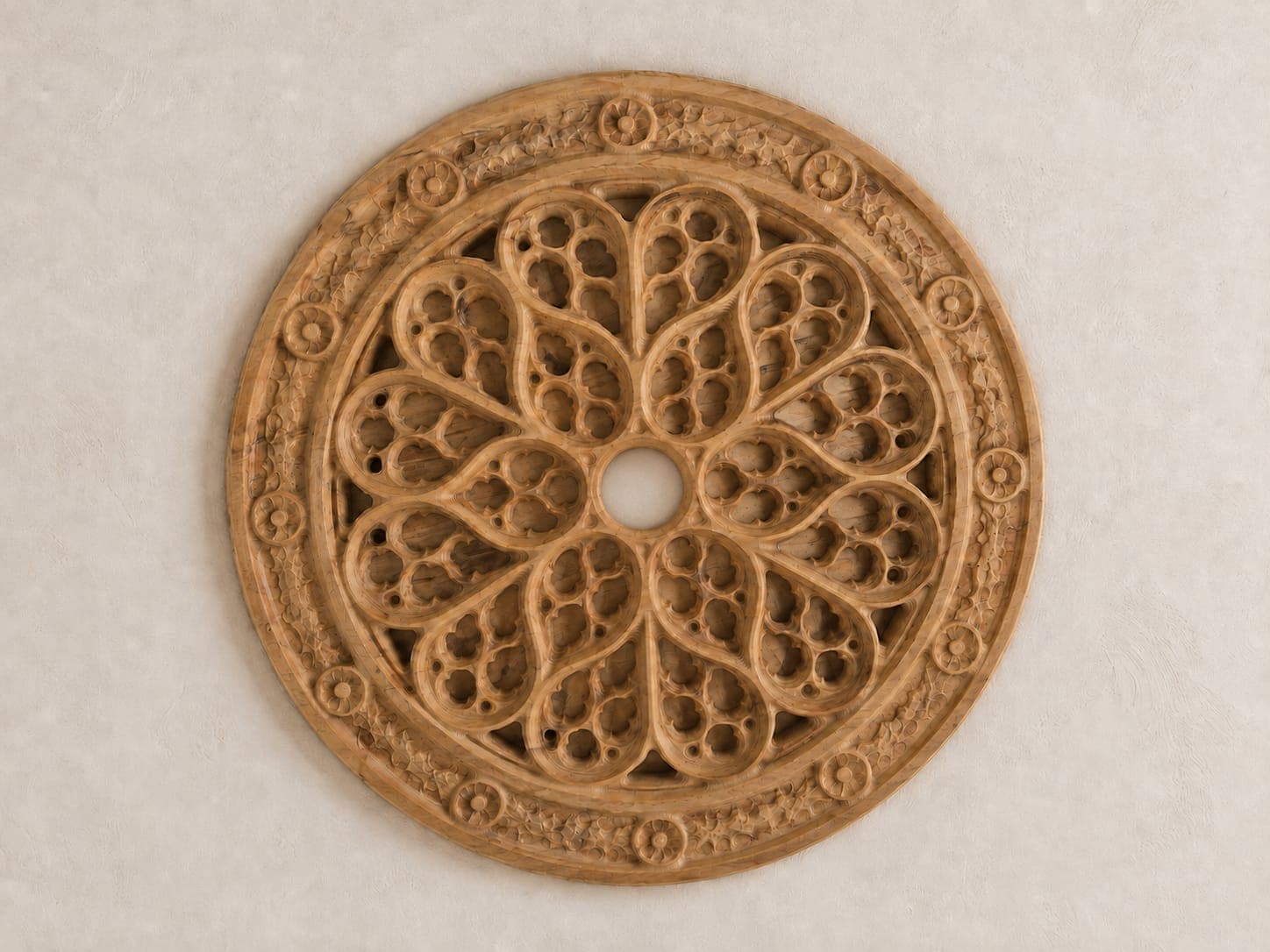
Coats of Arms & Portraits
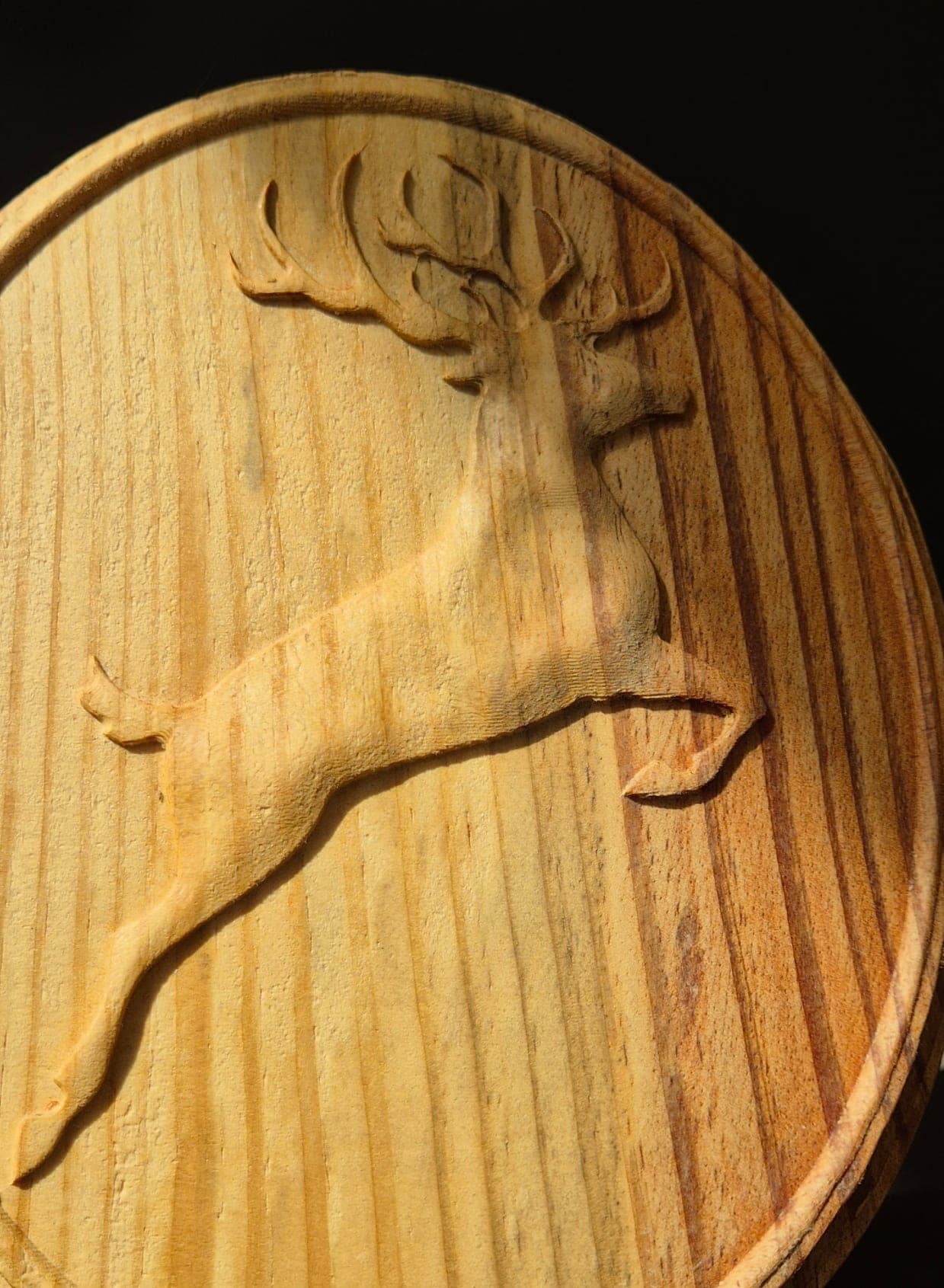
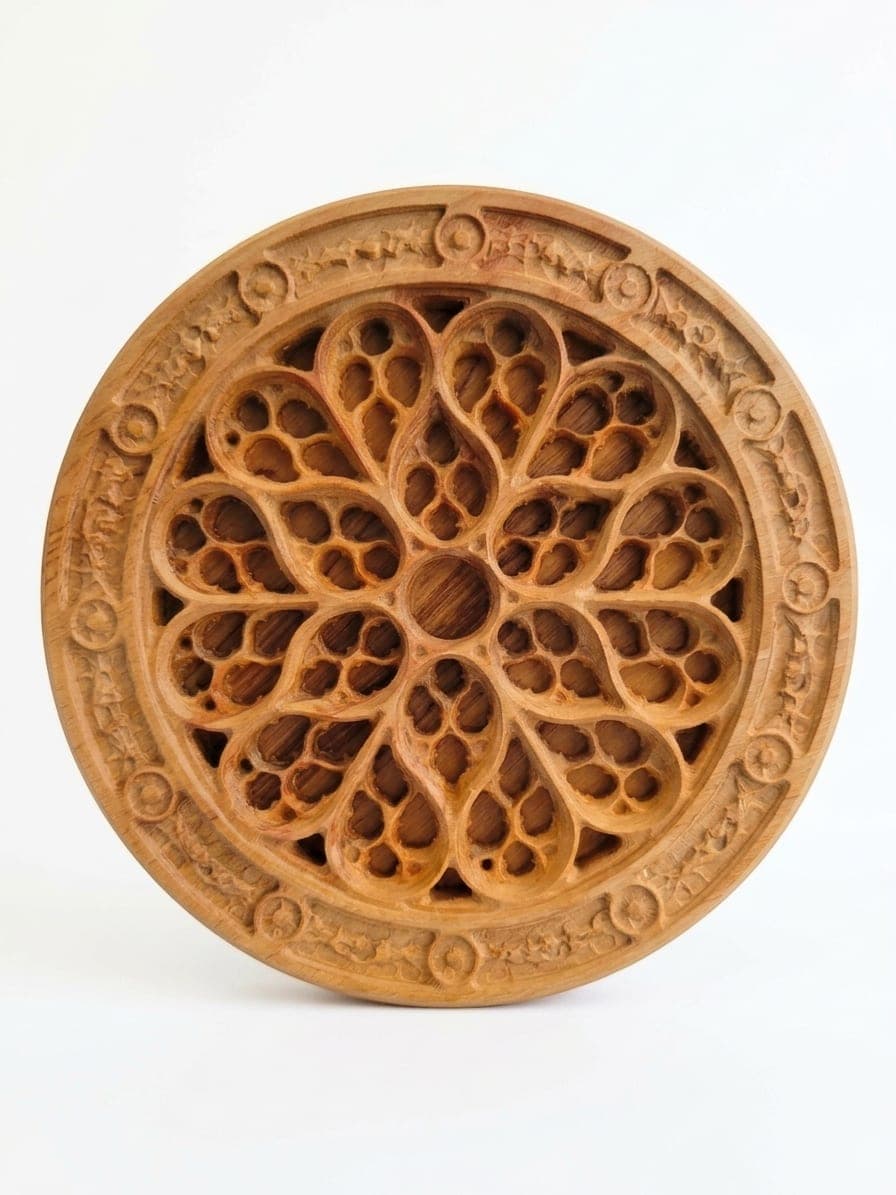
Inspired by the south transept rose window of Beauvais Cathedral, this piece is equally at home on a wall, above a door or as part of a ceiling medallion.
Ø 26 cm · Poplar, Pine
€120.00
ViewMade to match
Antique boiserie reproduction, made to match
A missing moulding, a damaged panel, an antique boiserie to complete: we reproduce the element to match in solid wood, ready to be fitted by your joiner.
Family coats of arms
A family coat of arms in wood: finding, designing and making your arms
Family crest or coat of arms: who may bear arms, where to look for your family's, the rules for creating new ones, and how we make them in solid wood.
Ceiling ornament
Solid wood ceiling roses: for the ceiling, the wall or the coffer
Solid wood ceiling roses, or ceiling medallions: where the ornament comes from, where to place one, which wood and finish to choose, and our Radiant Rosette.
Haussmann style
Haussmannian mouldings: recognising, completing and recreating the décor
Plaster cornices, wooden doors and parquet: how to read the décor of a Haussmann-era Paris apartment, who to call, and how to recreate it in solid wood.
Châteaux and historic houses
Send overall and close-up views, a few dimensions and, if you have it, the original fragment: the workshop replies within 48 working hours.
Describe my project