Bespoke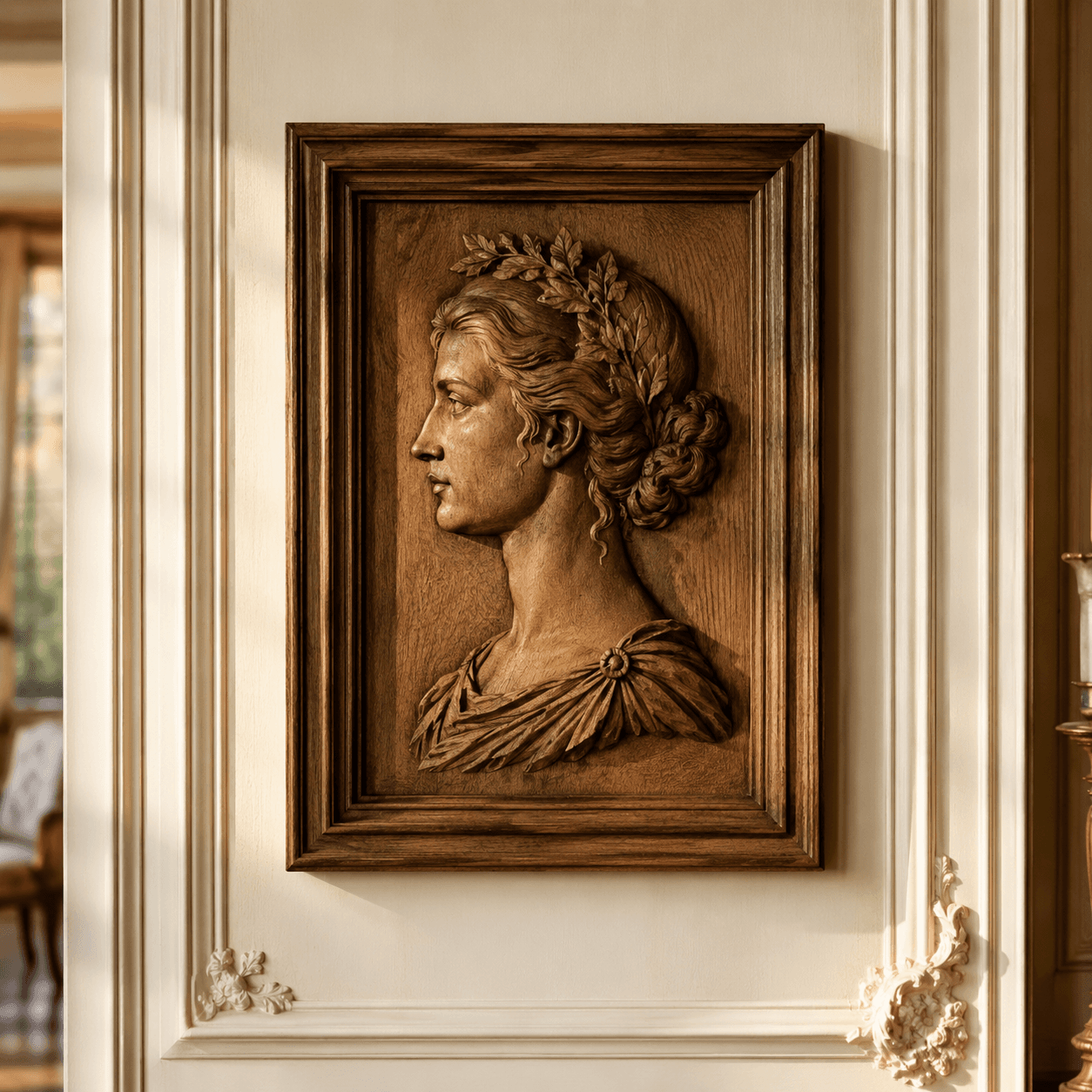
Coats of Arms & Portraits
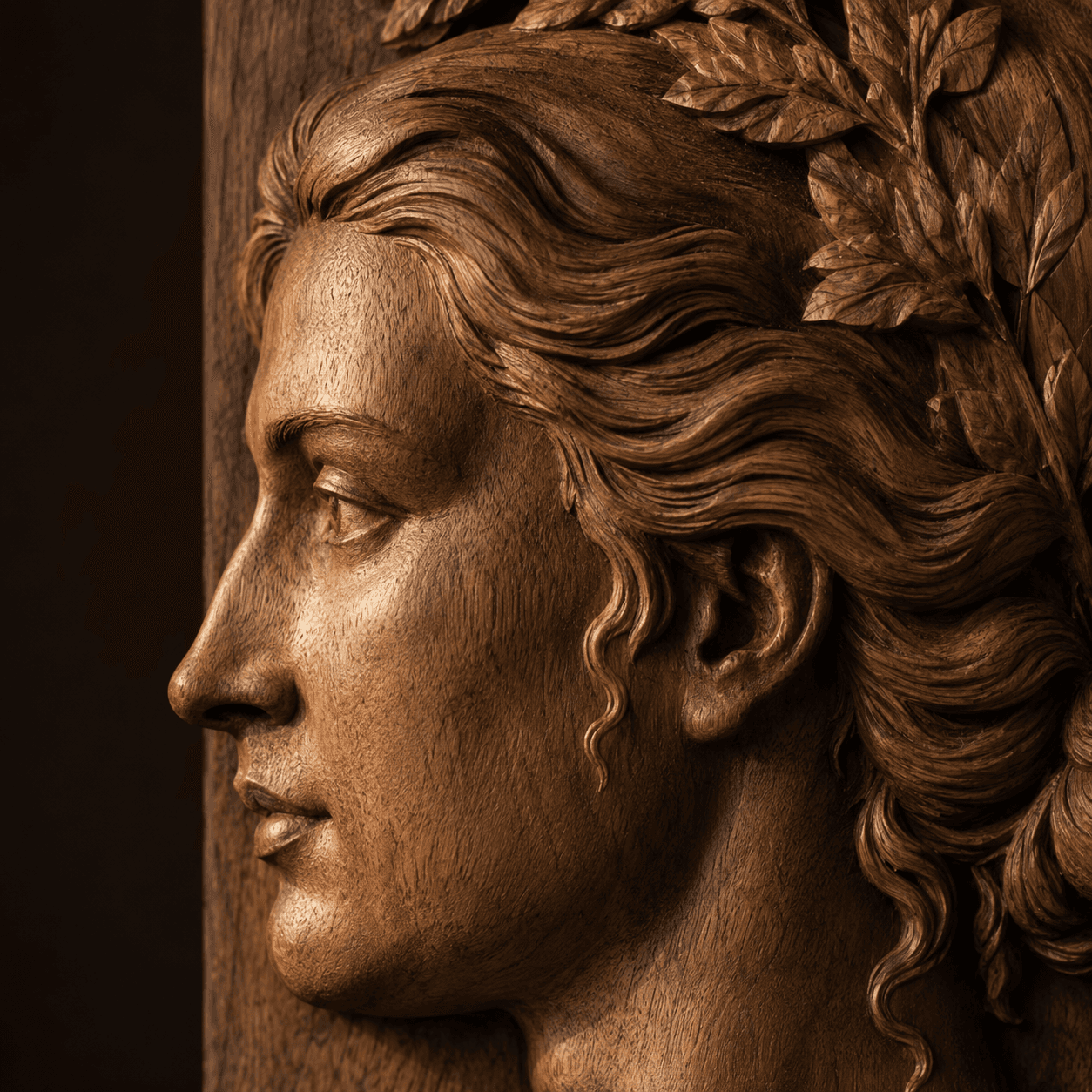
Carved Portrait
A portrait or family coat of arms, carved using visual references.
Size studied on request · Oak, Walnut
From€590.00
ViewFamily coats of arms
A family coat of arms is not reserved for noble lines, and it does not come with a surname alone. It is found in the archives, or designed according to a few rules that heralds have applied since the Middle Ages. This page answers the questions people ask before starting: who may bear arms, where to look, how to describe them. It then shows how the workshop translates them into solid wood.
A coat of arms, or arms, is a coloured emblem belonging to a person, a family or a community. Blazon is the set of figures, colours and rules used to compose and describe it, a grammar of sorts; heraldry is the discipline that studies it. In everyday English, 'family crest' is often used for the whole coat of arms, although, strictly speaking, the crest is only the device set on top of the helm; in French, blason can likewise mean the arms themselves.
Coats of arms appeared in western Europe in the twelfth century, on shields and banners, and most medieval ones have come down to us through seals. To describe them without a drawing, a coded language, the blazon, first states the colour of the field, then the partitions, the main charge and the secondary charges. A regional example: 'Gules, a cross clechée, voided and pommetty Or' is enough to describe the Cross of Toulouse.
No, and it is the most persistent misconception. In the Middle Ages, coats of arms quickly spread through the whole of society: women adopted them from the 1180s, burghers around 1220, tradesmen around 1280, and in some regions peasants bore them too. Of the medieval arms known in the West, only one in two is thought to have been noble. The Pas-de-Calais archives put it plainly: coats of arms were never reserved for the nobility.
In France today, the principle is free adoption and free use. Abolished in 1790 and restored in 1808 for the imperial nobility alone, coats of arms have been subject to no specific law since 1872, as the historian Michel Pastoureau points out. Anyone can therefore create their own. One limit remains: you must not take arms already borne by another family, which may be treated as usurpation or an infringement of their name, and is then a matter for the civil courts. The United Kingdom is different: arms are granted there by the College of Arms, for England, Wales and Northern Ireland, or by the Court of the Lord Lyon, for Scotland, which has criminal jurisdiction in heraldic matters.
First rule: arms belong to a family, not to a surname. The same surname may correspond to several coats of arms, since each branch may have borne its own, and the French Genealogy Federation advises checking that any arms you find really belong to your branch and not to an unrelated family with the same name. Arms found from the surname alone are a lead to check, not proof.
For French families, the reference source is the Armorial général de France, born of an edict of Louis XIV in November 1696 that made the registration of arms compulsory. It contains more than 115,000 family coats of arms and some 3,000 arms of towns and communities, arranged by province and généralité. Held by the Bibliothèque nationale de France, it can be consulted in full on Gallica. Knowing which region the family came from saves a great deal of time.
Keep a critical eye: the edict was aimed mainly at raising revenue, registration had to be paid for, and some arms were assigned automatically by the administration, sometimes in batches, to families who had asked for nothing. So cross-check with other traces: notarial deeds, seals, carved stones, silverware or engraved objects kept in the family.
In France, if no trace exists, nothing prevents you from composing new arms. They will not have the historical value of ancient arms, but they will be yours. Everything starts with the tinctures: two metals, or (gold) and argent (silver), and the colours, gules for red, azure for blue, vert for green, sable for black and, more rarely, purpure. Then there are the furs, such as ermine or vair.
One rule is not up for debate: never metal on metal, nor colour on colour. A gold lion on a silver field is hard to read; gold on azure, it can be seen from afar. For the rest, restraint pays: a field and one or two clearly legible charges. Canting arms, whose charges echo the family name, offer an entertaining route: Colbert's snake echoes the Latin coluber.
To make your family coat of arms in wood, we need a starting point: the text of the blazon, a copy taken from an armorial, a photo of a seal or a carved stone, or simply your sketch. We work out the drawing with you (shield, charges, any motto), then the piece is designed in 3D before being made in our workshop in Cornebarrieu. Finishing and detail work are done by hand.
Then the colours have to be rendered. They can be painted, or suggested in the wood by the hatching used in heraldic engraving: vertical lines for gules, horizontal for azure, diagonal for vert, crossed for sable. Oak and walnut suit a coat of arms left as bare wood, poplar a painted version.
Each personalised coat of arms is studied and priced on quotation. Browse our coats of arms and portraits and the bespoke portrait or family coat of arms offer, then send us your documents: we will tell you what can be made and in what form. For a gift with a fixed date, mention it in your first message; the timetable is confirmed with the quotation.
They have no official meaning. In the Middle Ages, tinctures served first to tell arms apart and to recognise them from afar. The tables that assign a virtue to each colour come from later treatises, such as Le Blason des couleurs by the herald known as Sicily, written in the fifteenth century, which linked gules, for instance, to the ruby and the planet Mars. These correspondences circulated mainly until the seventeenth century; heraldry today gives them no particular meaning.
It is read from the point of view of the person carrying the shield, standing behind it: their right, dexter, is therefore on the viewer's left, and sinister on the right. You state the colour of the field first, then the partitions and charges, working from the chief, at the top, to the base, at the bottom, and from dexter to sinister. Thanks to these rules, a well-blazoned coat of arms can be redrawn without ever being seen.
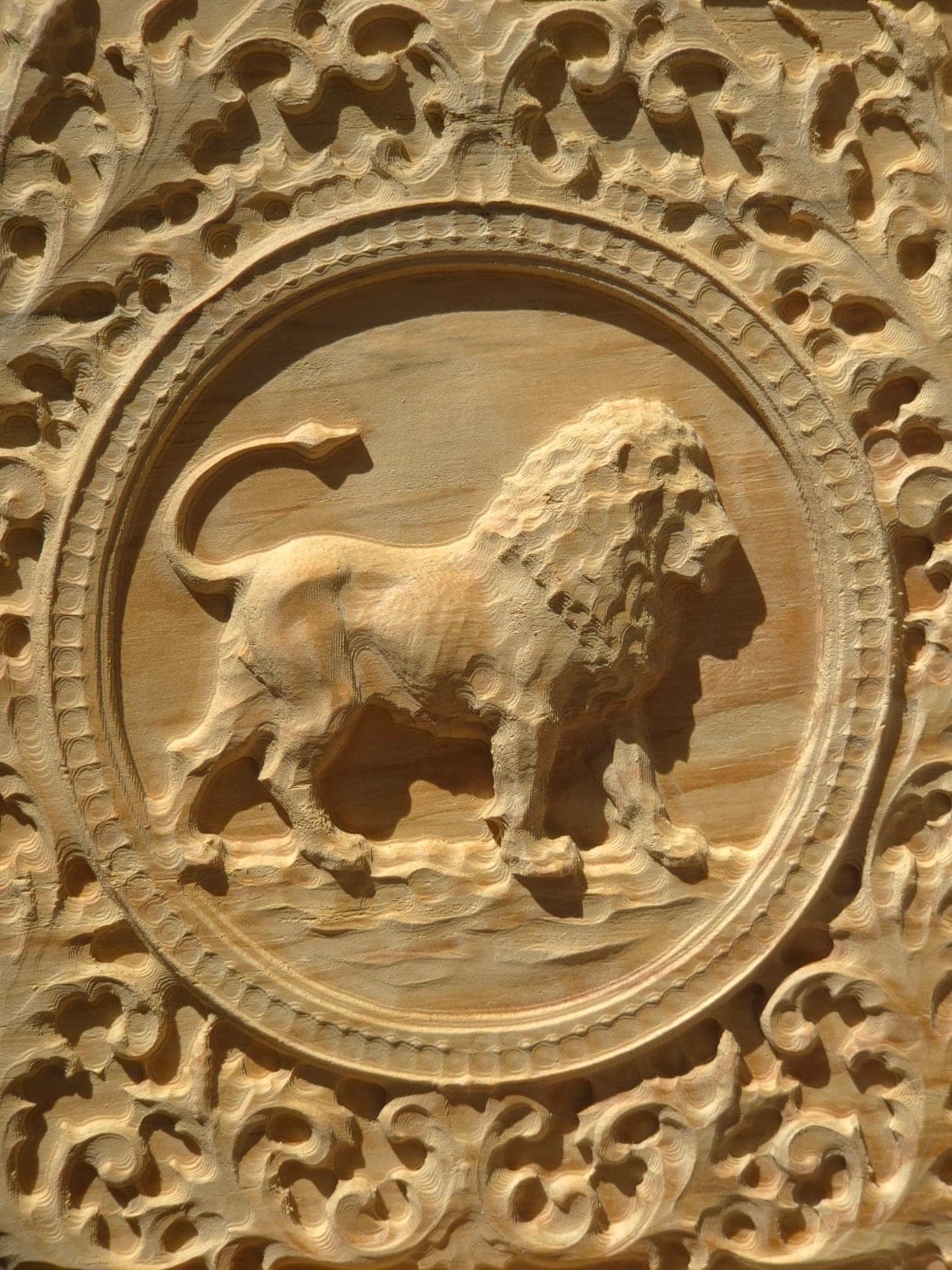
There is no fixed code. The lion is by far the most common: according to the historian Michel Pastoureau, more than 15% of medieval coats of arms bear one. As king of beasts, it stood for strength, courage and nobility. But an animal was often chosen because its name recalled the family's: these are canting arms. To understand a charge, it is better to research the family's history than to consult a dictionary of symbols.
Not officially in France: the State does not register private individuals' arms, and there is no longer a heraldic authority. Some associations offer a paid registration presented as official, which has no such standing. To give new arms a certain date, heralds advise instead publishing them in a work subject to legal deposit, lodging them with a notary, or sending them to yourself by registered letter, kept sealed. In the United Kingdom, by contrast, arms are granted and recorded by the College of Arms or the Court of the Lord Lyon.
Yes: free tools let you compose a shield online, and some will even draw the arms from a written blazon. It is a good way to try out combinations and to check the basic rule, never metal on metal nor colour on colour. The result remains a sketch: for a piece in wood, the workshop redraws the shield with you, taking into account the relief and the scale of the piece.
Occitan emblem
The Occitan cross in solid wood: the emblem of Toulouse and Languedoc
The Cross of Toulouse, clechée, voided and pommetty Or: its origins, the debated meaning of its twelve pommels, its uses today and our wooden Occitan cross.
Châteaux and historic houses
Château and period house boiseries: making what is missing to match
Château or period house boiseries to complete: new solid wood pieces made to match, the rules for protected French monuments, and how our workshop works.
Made to match
Antique boiserie reproduction, made to match
A missing moulding, a damaged panel, an antique boiserie to complete: we reproduce the element to match in solid wood, ready to be fitted by your joiner.
Family coats of arms
A blazon, an extract from an armorial or a simple sketch is enough to begin: the workshop works out the drawing with you before anything is made.
Request a quote