As France’s forests gain ground, why not invite more wood into our interiors?
Before it lines the walls of a house, holds up the roof, highlights the volume of a ceiling or becomes an elegant decorative dado rail, wood is first of all a tree. And that tree is the product of a complex ecosystem, shaped over decades, sometimes even centuries.
How France’s forests grew back
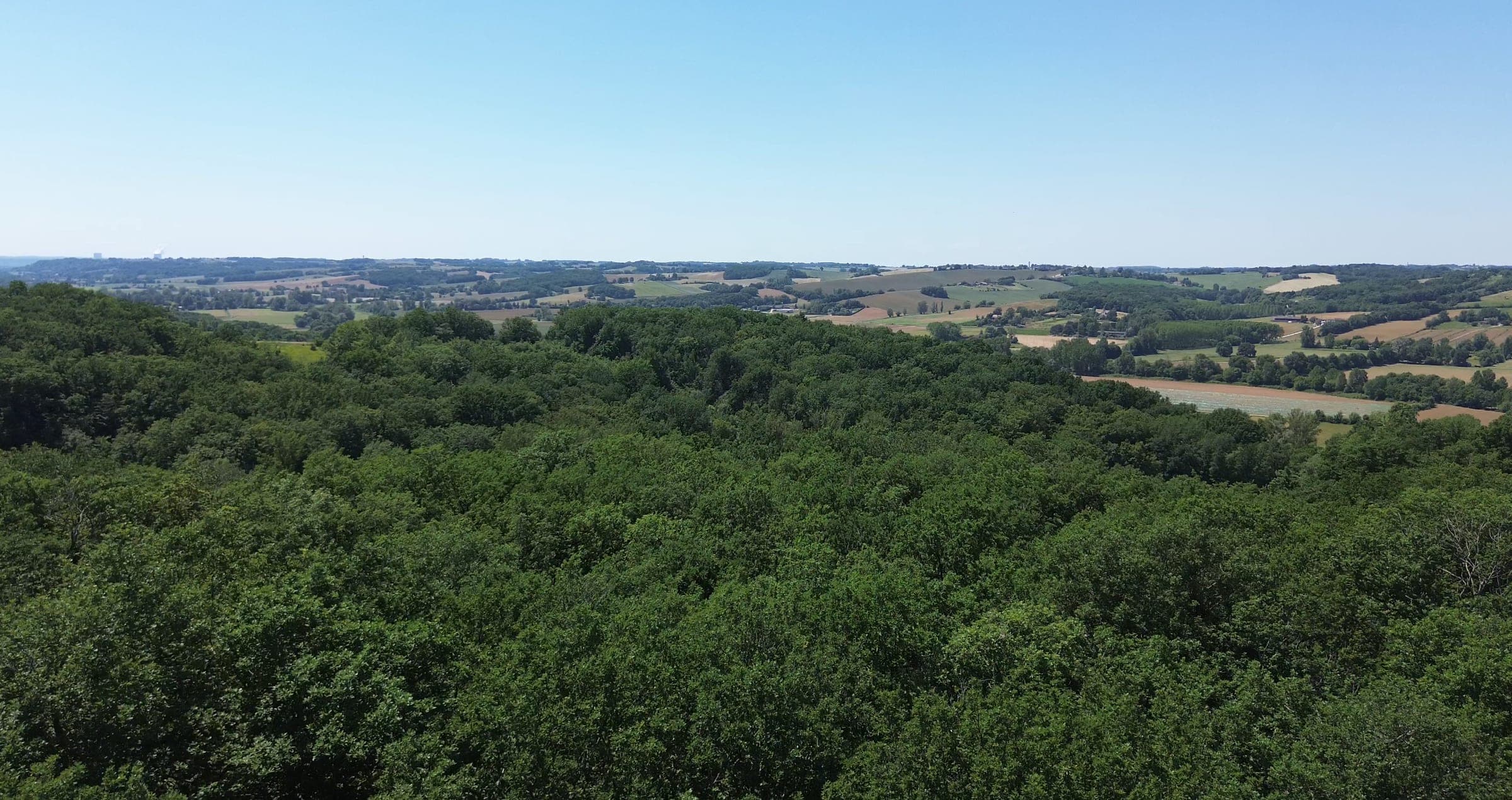
Few people realise it, but France’s forests have not been this extensive for several hundred years. Today nearly a third of metropolitan France is covered by forest, some 17 million hectares. That area has more than doubled since the mid-19th century.
Around 1840, French forests covered only about 9 million hectares. The need for farmland, wood for heating and early industry had greatly reduced the forested area. With the rural exodus, the gradual abandonment of some cultivated land and the reforestation policies pursued since the 19th century, trees slowly reclaimed vast areas.
Tree species shaped by their regions
Each region thus has its own characteristic species, suited to its soils, its climate and its history. In the Vosges and the Jura, conifers such as spruce and fir abound, along with beech. These woods are widely used in building and furniture making.
The Atlantic regions, for their part, have vast stands of maritime pine, notably in the Landes, home to the largest man-made forest in Western Europe. In Burgundy, the Centre region and Normandy, oak reigns supreme. Prized for its strength, its durability and the beauty of its grain, it remains one of the most sought-after woods for joinery, parquet flooring and boiseries with character.
Forest management planned over decades
Mention forestry and the image of clear-felling often springs to mind. Yet the reality is quite different in most French forests. A forest fulfils several functions at once: producing timber, preserving biodiversity, protecting the soil, encouraging the natural regeneration of stands and helping to keep ecosystems in balance.
An area being reforested usually holds a great many young trees locked in a genuine race towards the light, until the stand thins out and gradually gives way to the most vigorous specimens. By removing the trees most in the way, the woodland regains its capacity to grow, with trees of widely varying ages.
From tree to sawmill
In sustainable forest management, every intervention is planned over several decades. Mature trees are gradually replaced by young ones that will take over from them. After decades of growth, the tree then enters a new chapter in its story. Whether it is harvested after a storm, during a thinning intended to favour the finest trees, or in a scheduled felling, it makes its way to the sawmill, where it is sawn, dried and then processed.
The wood we use at AC Boiseries
At AC Boiseries, most of our pieces are made from timber sourced in sustainably managed forests in the Tarn-et-Garonne. The species available therefore vary with the fellings carried out and with stocks of timber that have sometimes been drying for several years. Each piece is thus closely tied to the natural rhythm of the forest.
What each piece carries from the forest
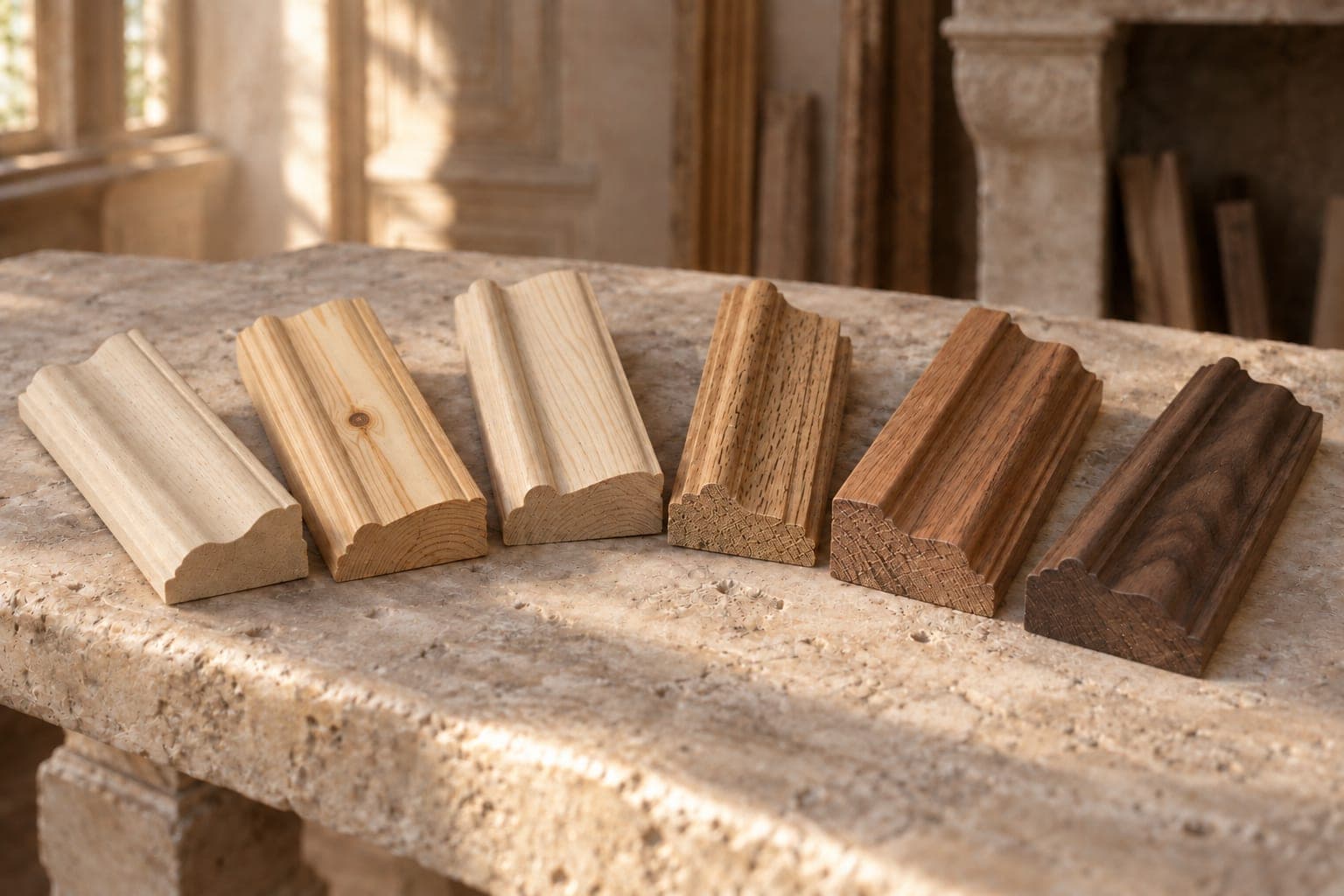
Behind every moulding, every decorative panel and every boiserie lie decades of growth, the patient work of foresters and the exceptional richness of France’s forests. Grooves, shades of colour, knots and variations in the grain each tell a different story and make each piece one of a kind.
Contrary to received wisdom, the most remarkable woods are not necessarily the smoothest or the most uniform. The densest species, such as acacia, olive or oak, often reveal an extraordinary variety of forms, textures and tones. It is precisely this singularity that gives them their character, their authenticity and their beauty.
Read: decorative wood mouldings
A boiserie to imagine?
The workshop can turn an inspiration, an archive or an existing décor into a bespoke piece.
Discuss the project